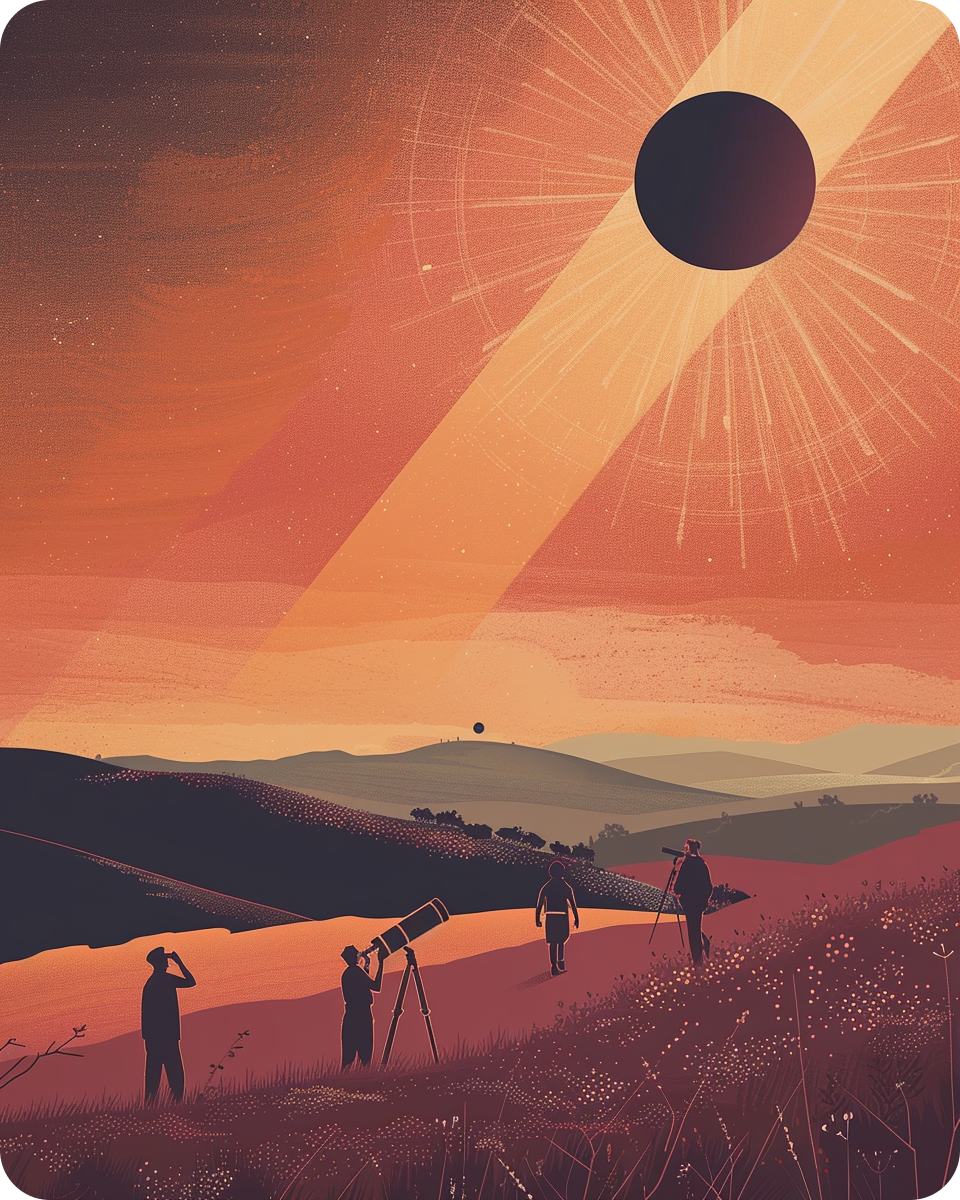
Most people calling an eclipse “pretty cool” are talking about a partial eclipse; the Sun just shines a little less brightly, and you can see a bite missing with eclipse glasses. Even the tiniest sliver of Sun, however, spoils the full effect.
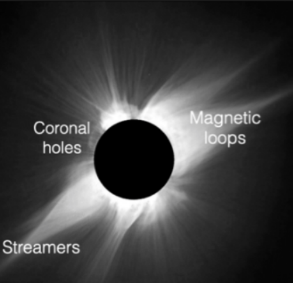
During a total solar eclipse, the light truly goes out: the Moon completely covers the Sun’s disc and, only then, can you see – with the naked eye – the Sun’s glowing outer atmosphere. That’s the corona:
Totality is rare. Unless you travel, there’s less than a 25% chance of experiencing one in your lifetime. The Moon’s shadow path is narrow, often about 100 km wide. So you need to be in exactly the right place, ideally near the center line, to enjoy the longest darkness. The best viewing spot depends on the eclipse. You need to be inside the path of totality, with a clear view of the Sun and a plan for changing weather. When the Sun is low, even a distant hill or building can block those crucial minutes. That’s why travelling for a total eclipse takes some planning—and why seeing the light change around you makes the journey worthwhile.
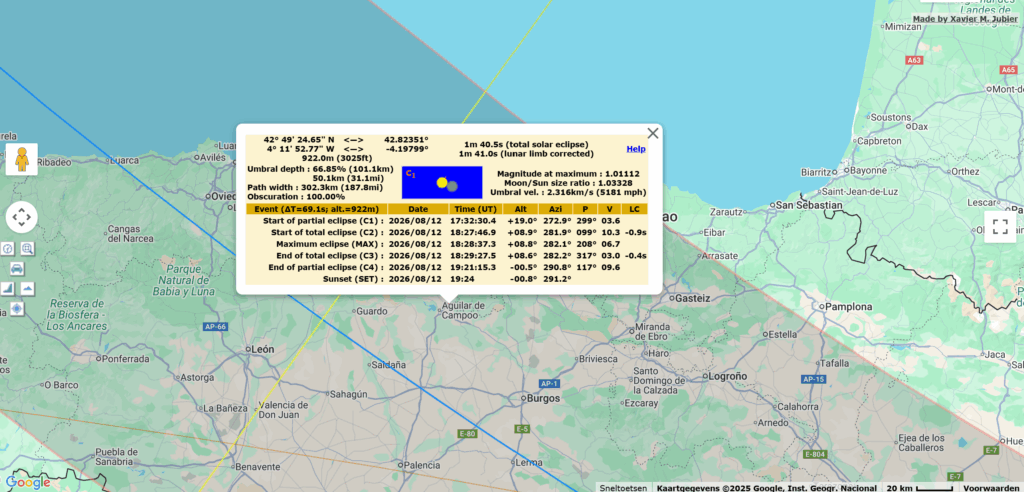
An example: on 12 August 2026 our moment arrived: late afternoon in northern Spain, Aguilar de Campoo, we experienced over a minute and a half of a totally eclipsed Sun. Because the Sun was low in the sky, it was especially important to have an unobstructed horizon. This is why eclipse travel is worth it: that unique interplay of physics, nature, and emotion compressed into a few breathtaking minutes.