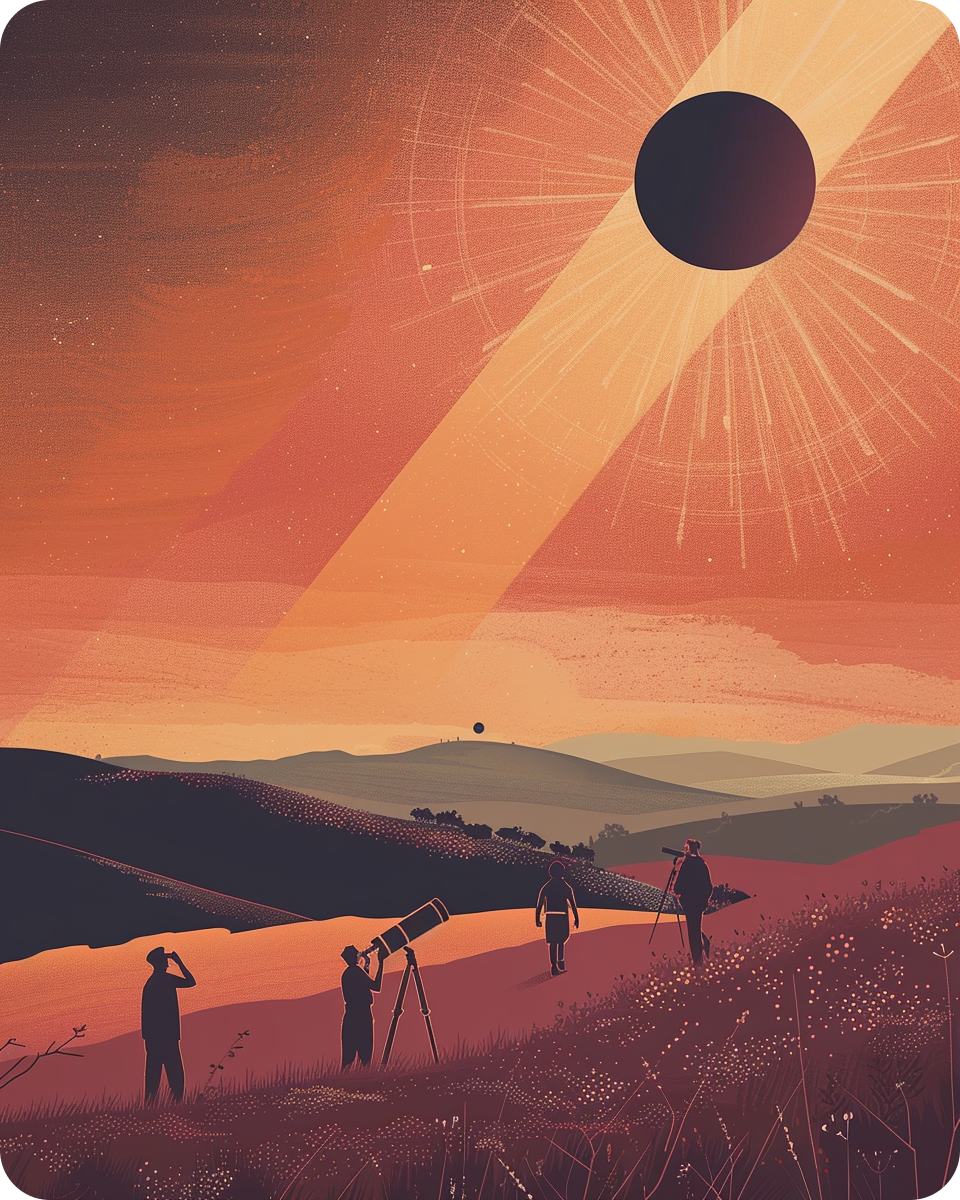
HALO (Human Alignment during a Lunar Occultation of the Sun) is a citizen science project that documents how people collectively experience totality during the 12 August 2026 total solar eclipse.
Sensations
A total eclipse is more than darkness for a few minutes. People notice changes everywhere: in the sky, on the ground, in animals, and in themselves. There is sudden silence, excitement, emotion, and a powerful sense of sharing the moment with others.
These shared emotions matter. They play a role in how we feel connected and how we remember important moments. Yet they are rarely captured beyond personal stories, photos, or videos.
HALO brings this natural event and the human sensations together.
Participate in HALO
HALO combines different types of input across the path of totality. You can contribute in several ways:
- Use the HALO app during the eclipse
Respond to short mini-surveys at key moments to capture the experience. - Record observations
Capture audio, video, or changes in light and colour. This poster helps you to set up your video. - Share past experiences
Contribute your memory of a previous total solar eclipse through a short online survey. - Join as a group or field site
Participate together or collaborate as a research partner.
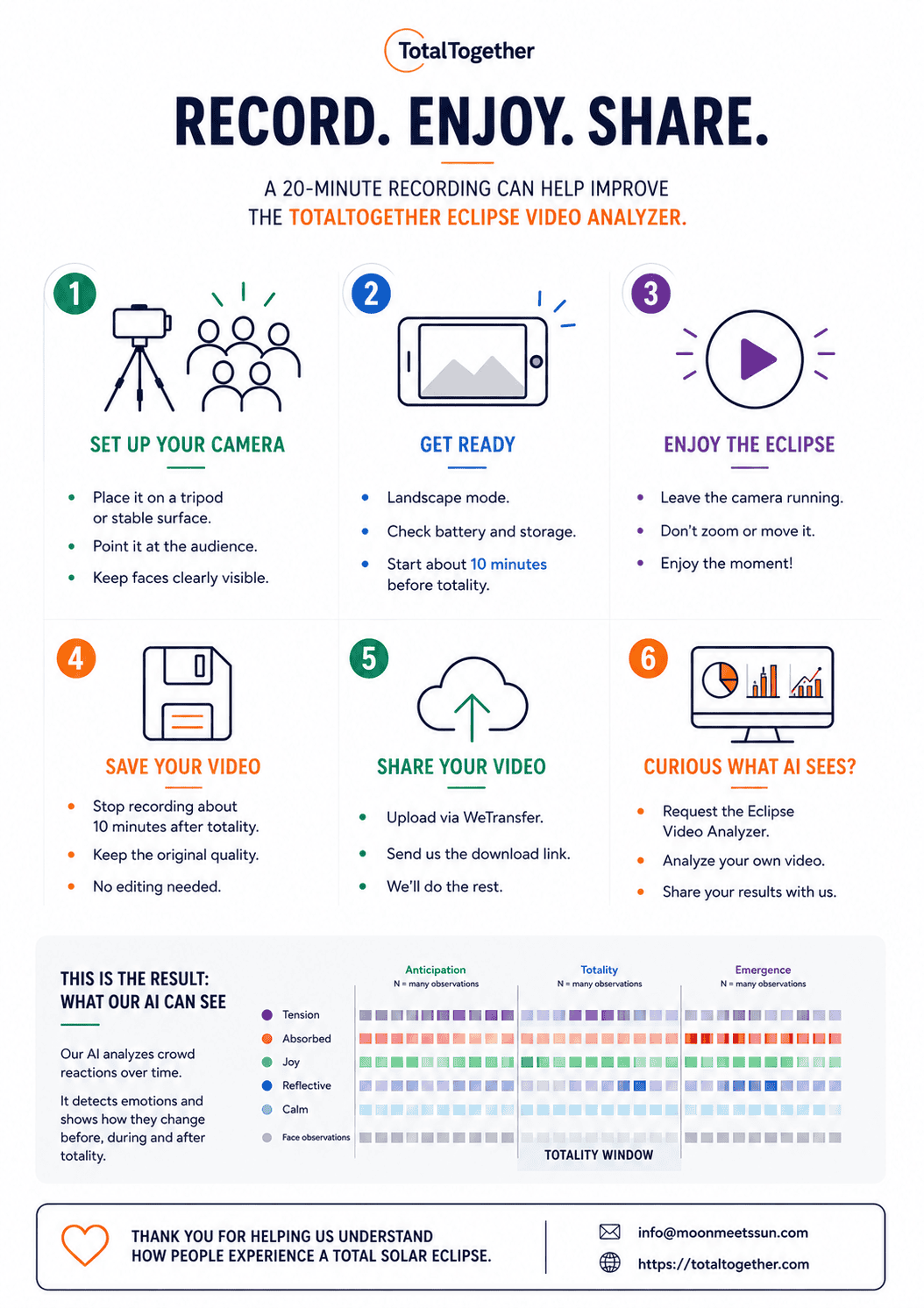
First Results: Award-winning research prototype
In recent months, four students from the Applied Data Science & Artificial Intelligence programme at The Hague University of Applied Sciences (Netherlands) investigated how video analysis could help study collective audience responses during a total solar eclipse.
They developed a working prototype that connects observable changes in group reactions to the different phases of an eclipse. The project demonstrated that large amounts of eclipse footage can be processed in a more structured and consistent way, creating a basis for comparing recordings from different moments and locations.
The project was presented at the THUAS Expo on 3 July 2026 and received both the Student Award and the Lecturer Award.
Following the student project, the method was applied to footage of the total solar eclipse in Exmouth, Australia, on 20 April 2023. This resulted in the first Eclipse Experience Card: a visual summary of changes in observable audience reactions before, during and after totality.
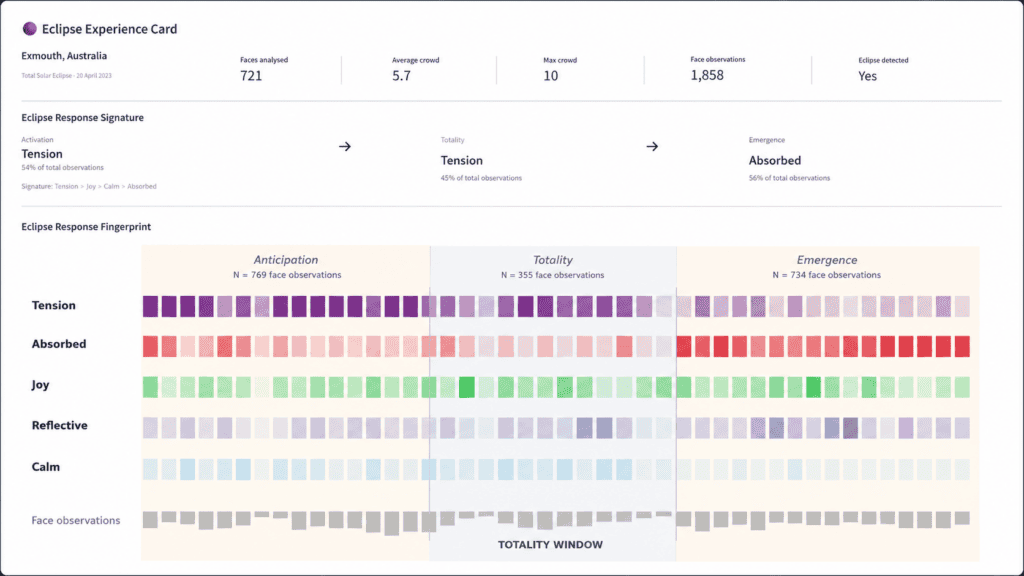
The study also identified important directions for further development. These include testing the method with more varied recordings, improving analysis under difficult lighting conditions, incorporating audio and making the prototype easier to use outside a technical research environment.
The analysis is exploratory and focuses on collective patterns rather than individuals. Anyone interested in the research report, methodology or current prototype is welcome to contact TotalTogether for further information.