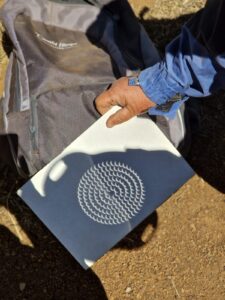
In the last minutes before totality the world itself becomes a show. Through a kitchen colander or under a leafy tree you’ll see hundreds of tiny crescent Suns dancing on the ground: the camera-obscura effect. On a white towel you might even catch shadow bands, shimmering stripes caused by atmospheric turbulence as the Sun shrinks to a point.
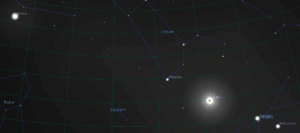
As soon as the Sun is totally covered, the sky turns into a night-like panorama. Venus shines brightly to the upper left of the Sun; near the horizon Jupiter and Mercury appear. With binoculars you may glimpse prominences and solar flares fiery fountains of gas at the edge of the eclipsed disc.
As soon as the Sun is completely covered, the sky darkens. Depending on the eclipse and your location, Venus or other bright planets like Jupiter and Mercury and stars may become visible. Look around as well as up: the horizon can glow like sunset, while the Sun’s corona and sometimes pink prominences and solar flares appear around the dark Moon. You may look directly at the Sun only during complete totality; put your eclipse glasses back on before any bright sunlight returns.
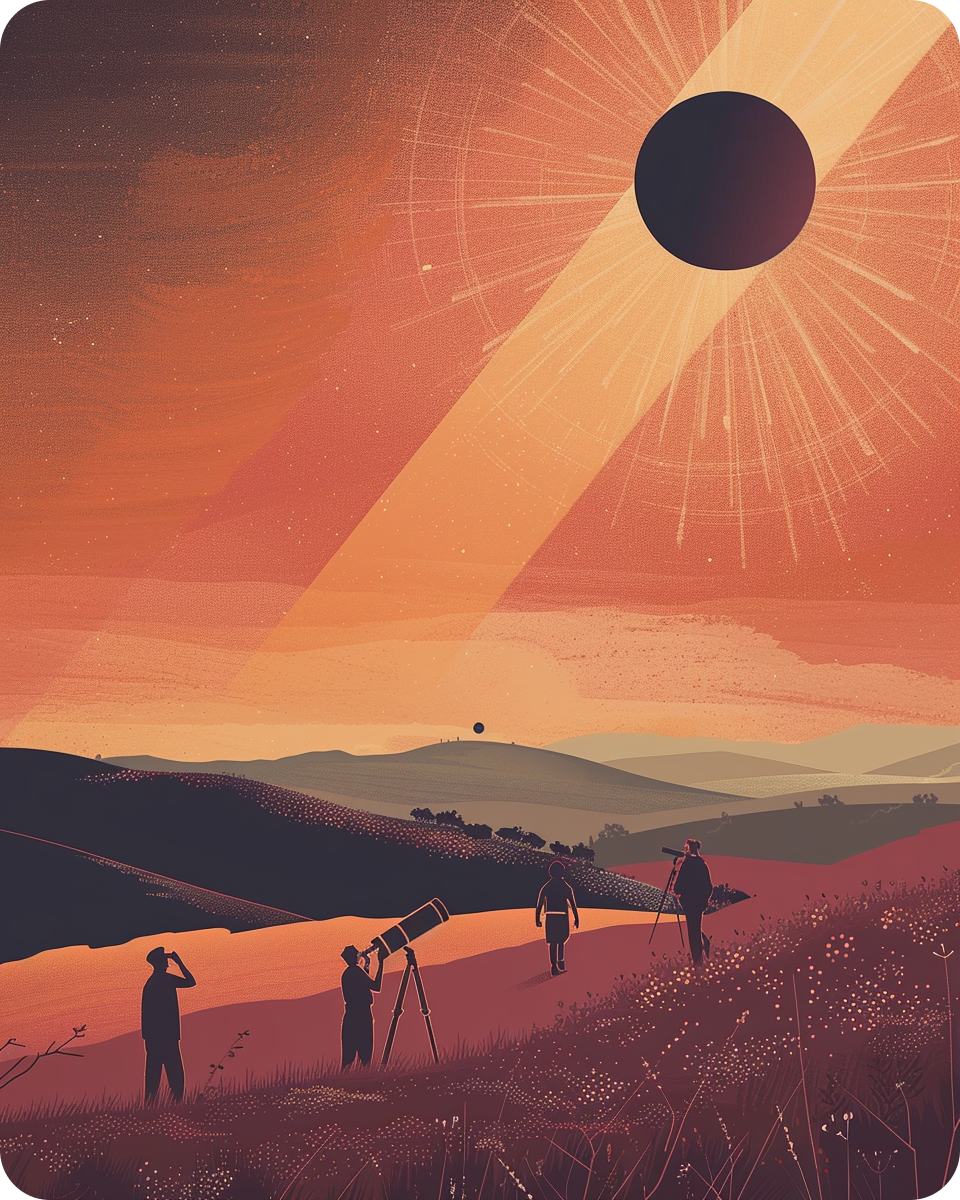
Don’t forget to look around: the 360-degree horizon glowing like sunset, the sudden chill in the air, and the hush over the crowd. These sensory details make a total eclipse a truly multi-dimensional experience.
More about eclipses:
EclipseWise.com – Fred Espenak: check precise contact times and star/planet visibility data.
WhenIsTheNextEclipse.com – Jamie Carter: articles on rare eclipse phenomena like shadow bands and prominences.
Eclipses visibles en España – Instituto Geográfico Nacional (IGN): official Spanish government site with interactive tools for local timings and phenomena visible in Spain.
NationalEclipse.com: guides on safe viewing and what to expect during each phase.